You have 0 items in your cart
Beyond the Runway: The Values Driving Slow Fashion Week
For the second consecutive year, the BAGA Collective organized Slow Fashion Week in Marseille, highlighting alternative ways of consuming fashion while reducing the industry’s environmental impact. Bringing together more than 120 members, primarily women, the collective believes strongly in collaboration as a driver of change. Open to all and free from gatekeeping, the event promotes values that parts of the fashion industry have distanced themselves from: inclusivity, equality and respect.
Throughout the week, I participated in different roles, from volunteer to active audience member during roundtable discussions, drawing on my background in sustainable supply chain consulting. I also had the opportunity to model in several events.
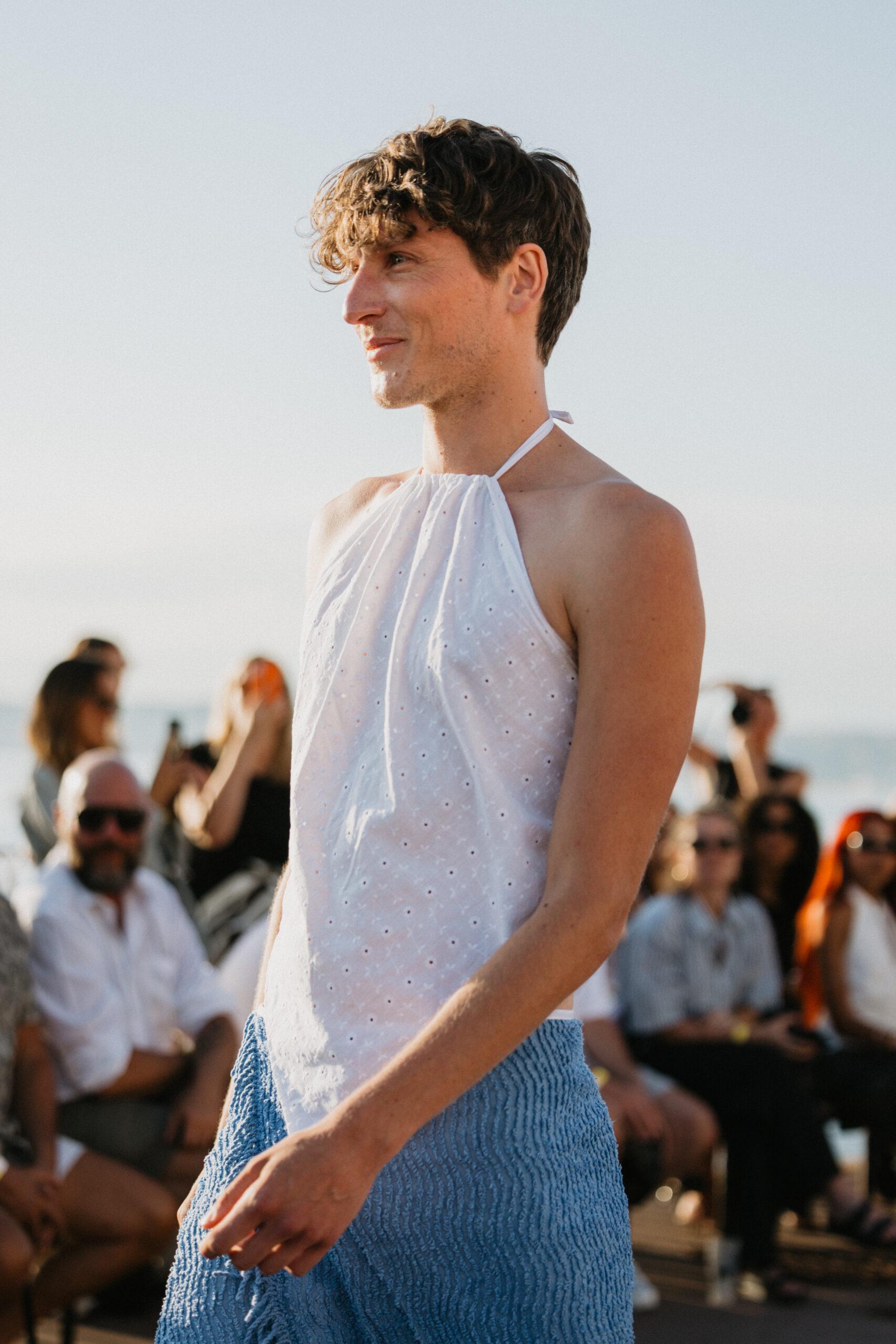
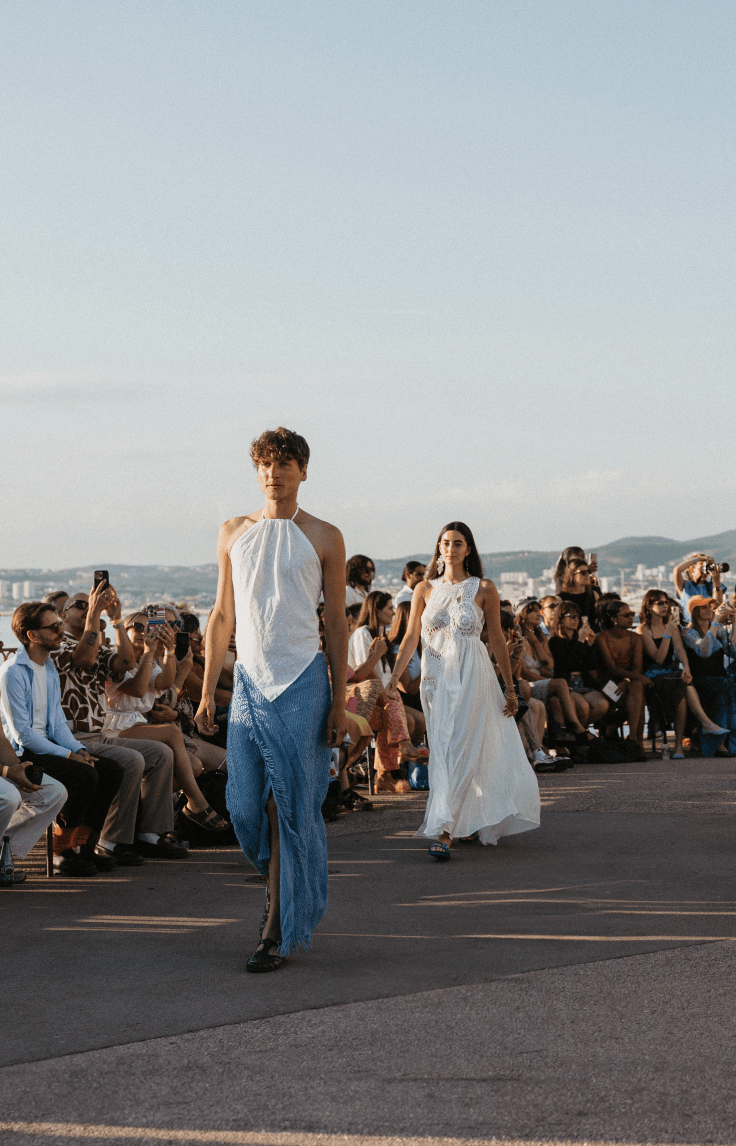
One runway show that will stay with me was the presentation by Engagés Engagées at the Porte d’Orient, a beautiful war memorial overlooking the Mediterranean. Held in the early evening, the show benefited from exceptional light and a breathtaking setting. Walking down the monument’s stairs towards an audience gathered by the sea was a memorable experience.
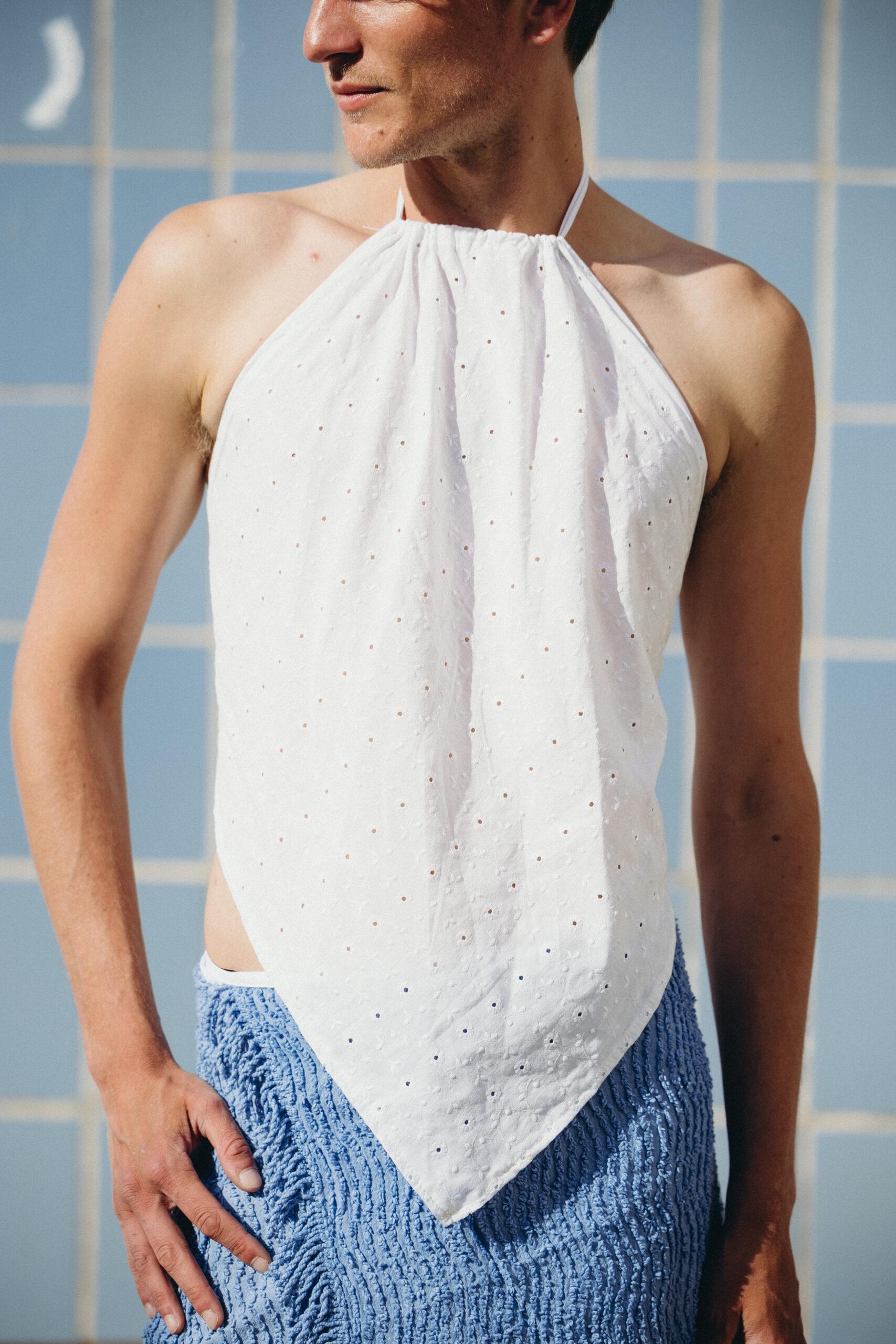
The look I wore reflected both the collection’s theme, “Soleil Bleu” (translated “Blue Sun”), and my own values. It featured a skirt, and while seeing men wear skirts is common in Berlin, where I live, it remains less common in Marseille. I therefore felt honored that designer Julie Genevois gave me the space to express values of inclusion and diversity, which also represent an important facet of Marseille’s identity.
The Upcycled Piece That Started It All
Slow Fashion Week was the perfect occasion to bring out my very first upcycled look—a piece that holds a special place in my wardrobe and in my journey within sustainable fashion.
The outfit was a gift from fashion designer Mame Khady Badji, with whom I have collaborated several times on photoshoots and runway projects. Originally from Senegal and now based in Berlin, Mame’s work demonstrates that upcycling can be both aesthetically compelling and deeply meaningful.
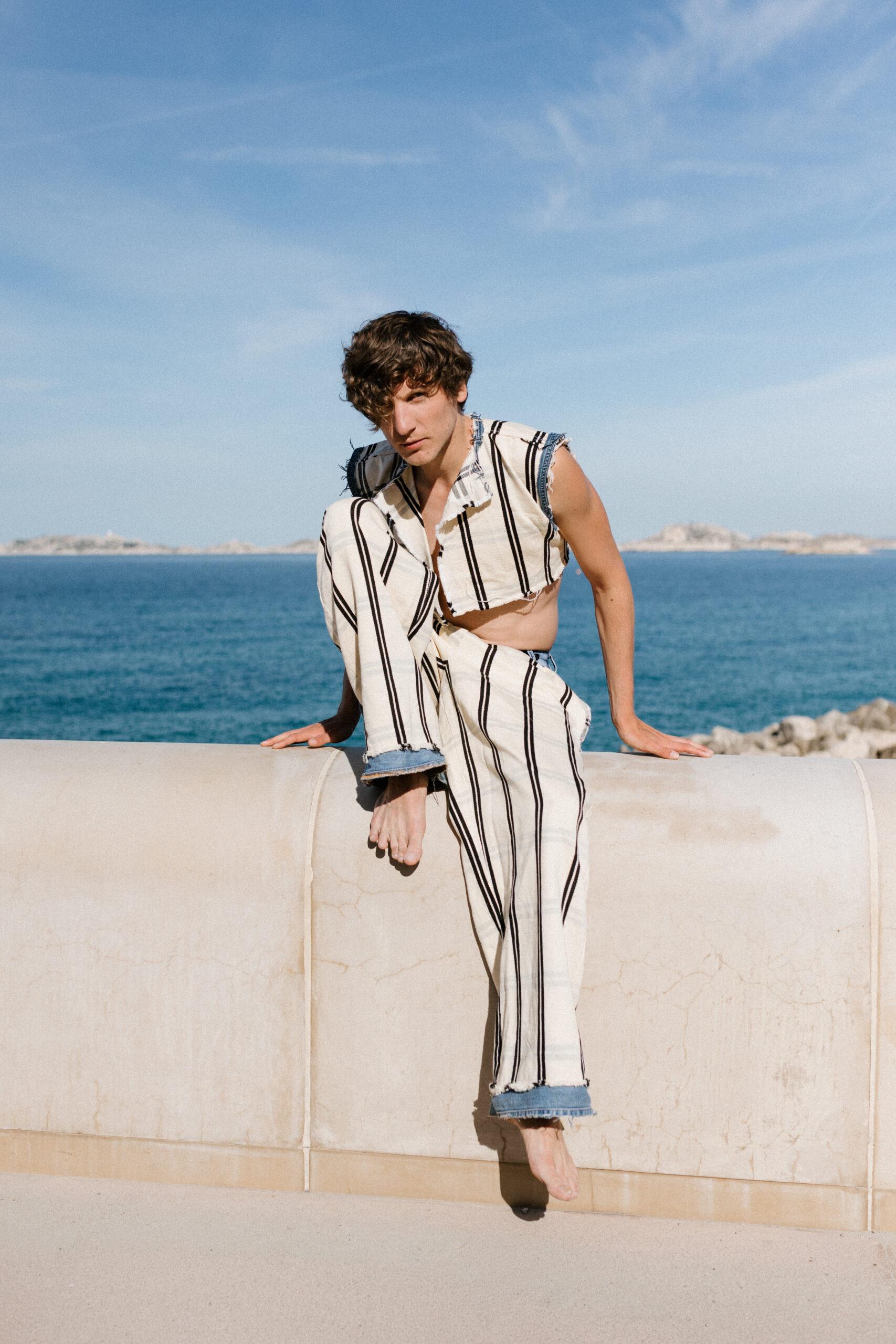
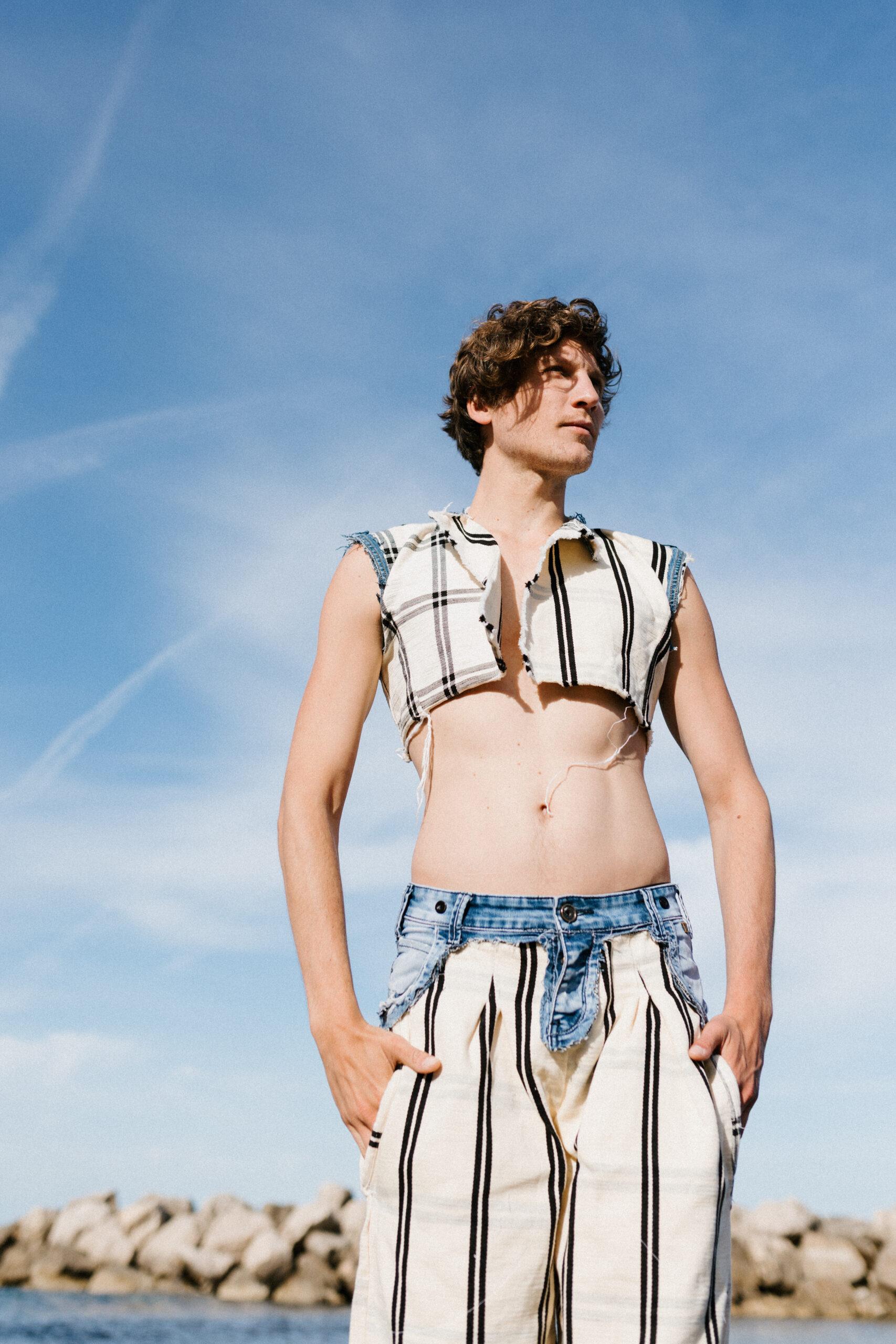
The look comes from her collection Bungañen, which means “what is leftover” in Diola. The fitted crop top was crafted from black-and-white fabric that once served as curtains and was destined for disposal before being transformed into a new garment. Through pieces like this, Mame gives discarded textiles a second life while preserving their story.
I wore the outfit at the opening ceremony of Slow Fashion Week and received many compliments throughout the evening—compliments that I happily passed on to Mame, with gratitude and affection.
This first upcycled look is particularly precious to me because it reflects a commitment that has accompanied me since I began modelling several years ago: advocating for a more responsible fashion industry.
My engagement takes different forms, from my involvement with Fashion Revolution to the creation of RE/CLAIMED, a fashion show I founded in Berlin. The project combines fashion with artistic disciplines such as film, dance, music and installation art to explore the social and environmental impacts of the industry. Beyond raising awareness, RE/CLAIMED seeks to provide audiences with practical solutions through interactive and playful formats—from repair and upcycling resources to everyday actions that help reduce textile waste and microplastic pollution.
This garment therefore represents more than a look. It is a reminder that what is left behind can always become the starting point for something new.
Fashion with a Social Purpose
Upcycling is more than a creative response to textile waste—it is also a powerful tool for social inclusion. By creating value from discarded materials, many upcycling initiatives support sorting centers and community projects that provide opportunities for people who are distant from employment.
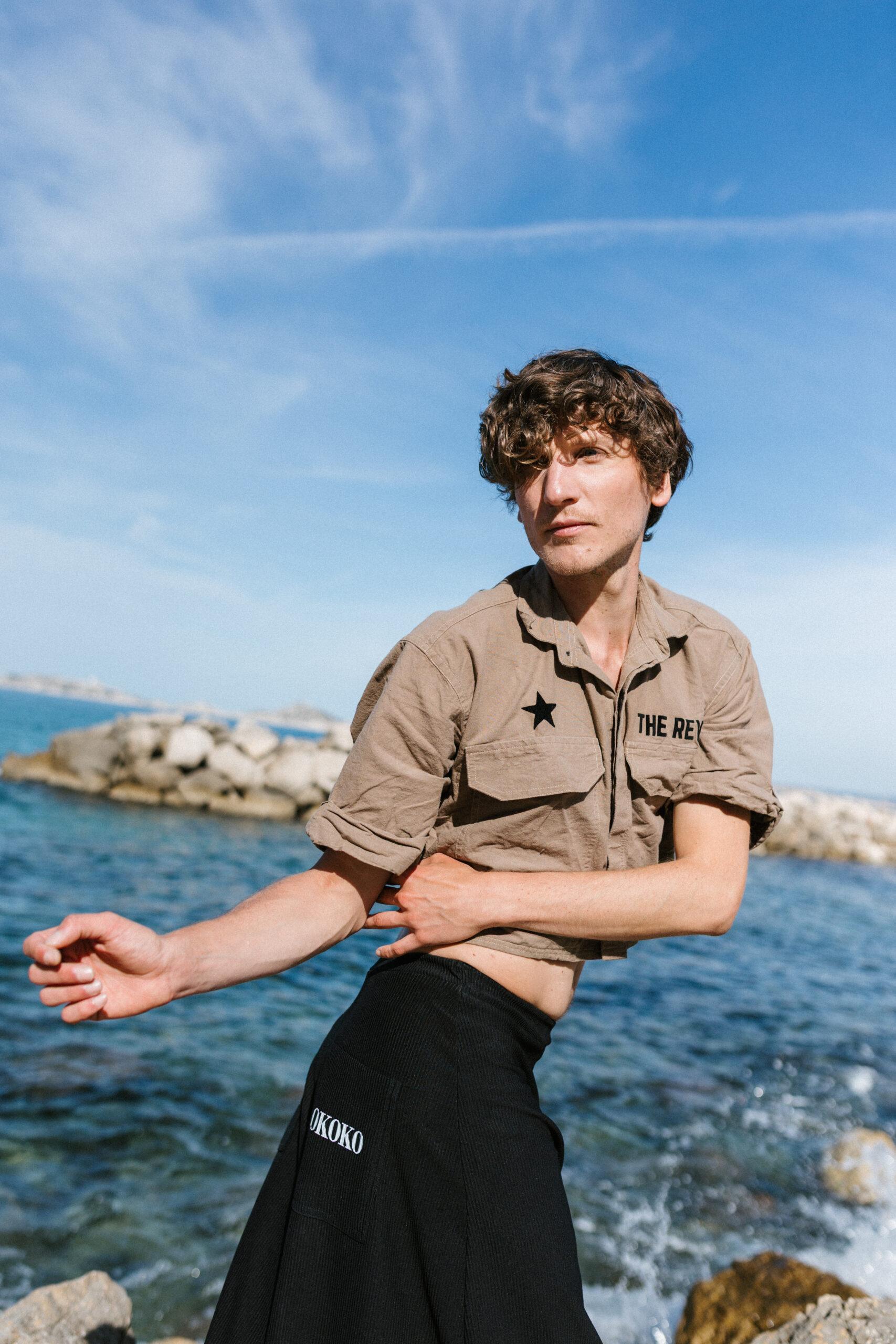
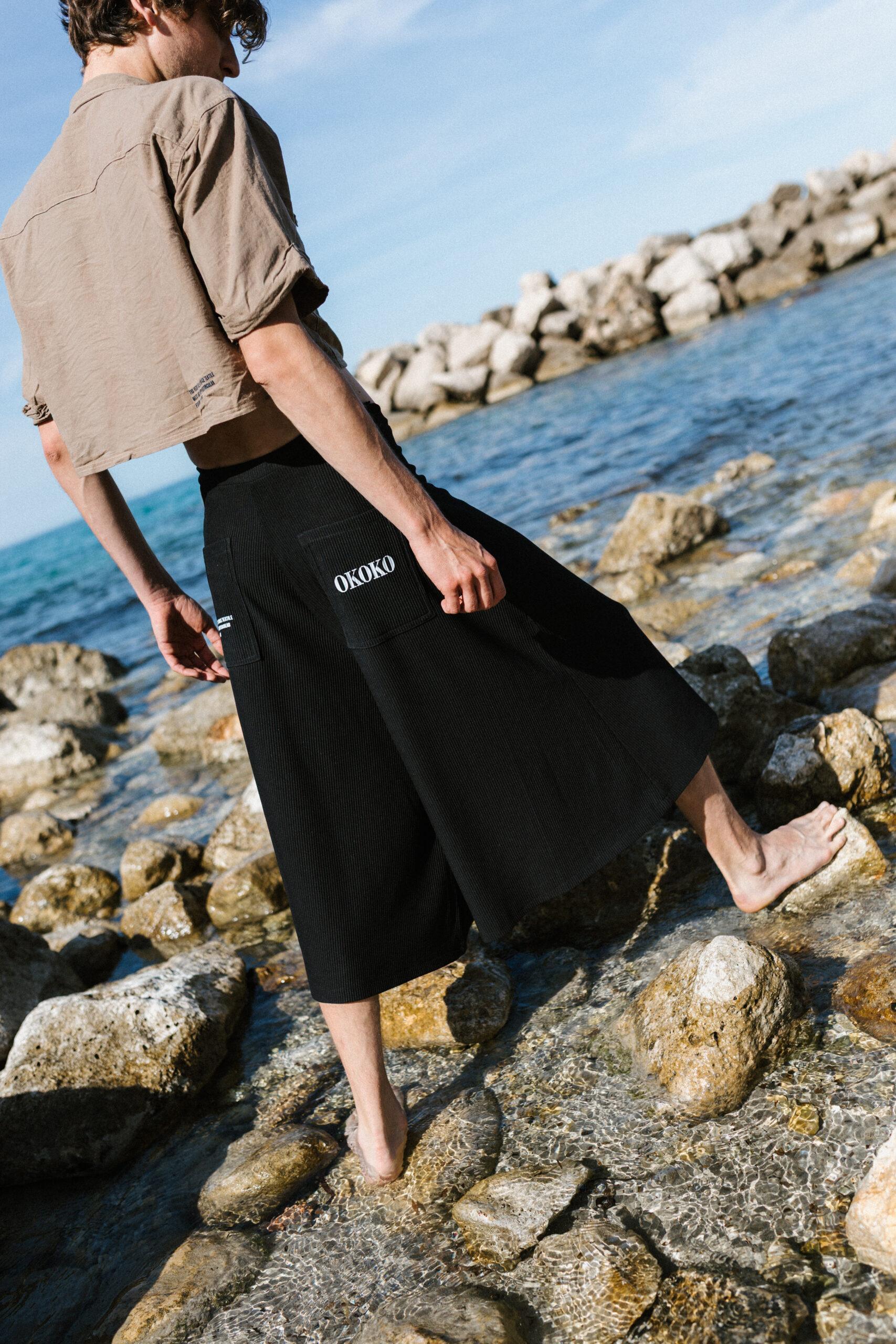
For me, upcycling was also the reason behind my most recent trip to Ghana, where I discovered the people and stories behind this look. The top comes from The Revival, a community-driven NGO that supports local communities through upcycling initiatives and education around textile waste. The organization has received international recognition for its work, while its founder, Yayra Agbofah, has been named among TIME’s most influential climate leaders.
The trousers, known as the Zagbo Jort, were created by Okoko Fashion, with whom I built a strong connection during my stay in Ghana. We quickly bonded through our shared experiences as models, our common language, French, and our links to The Revival network.
Over the course of my visit, we spent time thrifting, creating garments, exchanging stories and even selling pieces on the beach on a Sunday afternoon to support his work. These moments offered a unique insight into the realities, creativity and resilience that drive Ghana’s upcycling community.
I am particularly proud to wear both the top and trousers, which were made from textile leftovers sourced in Kantamanto Market, one of the world’s largest second-hand clothing hubs. Beyond their aesthetic value, these garments represent a social cause, meaningful human connections and the memories of a journey that profoundly shaped my understanding of circular fashion. In many ways, they embody everything I brought back from Ghana.
Reimagining The Future of Fashion: Upcycling beyond a Trend
During my month in Ghana, I had the opportunity to meet several upcycling designers, not only to discover their work but also to understand the challenges they face and give visibility to their perspectives. Conversations around sustainable fashion are too often framed through a European lens. This experience encouraged me to broaden my own perspective and make space for voices from across the Mediterranean and the African continent.
Among the pieces I brought home is a pair of trousers by KOMA ARC, a perfect example of how garments can be reimagined rather than discarded. Whether a piece no longer reflects our style or has simply been damaged over time, upcycling reminds us that clothing can always be given a second life.
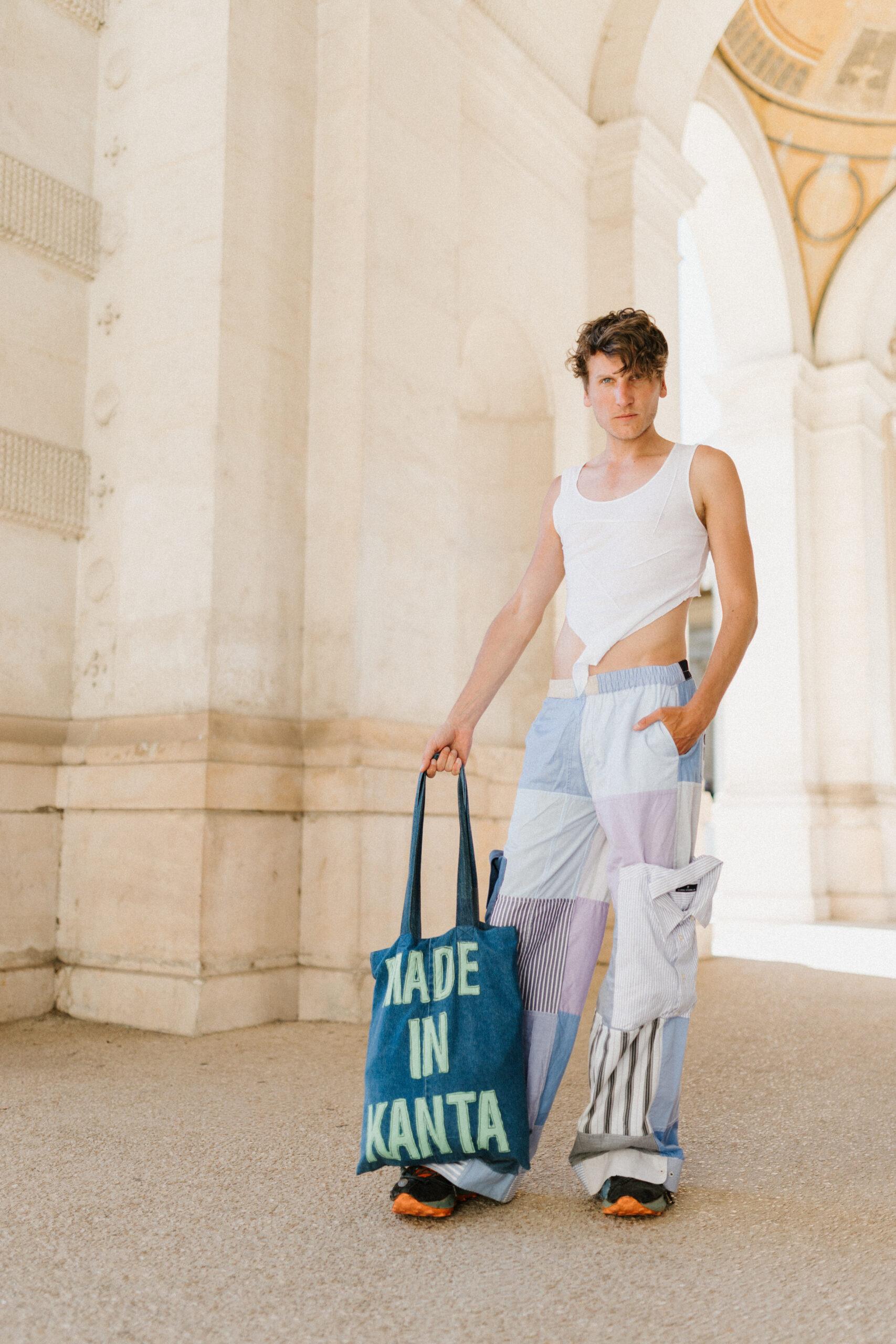
The bag, created by Kuoro Earth, proudly reflects the same philosophy. Made from reclaimed materials and featuring a reversible design incorporating repurposed shirts, it shares a creative dialogue with KOMA ARC’s work. Both designers have been supported by The Or Foundation, one of the leading organizations working on textile waste and circular fashion in Ghana.
Another memorable encounter was with Glory Adom, who created the shoes featured in this look from a pair of jeans he treasured in his youth. Knowing the personal story behind the piece makes wearing them especially meaningful. Beyond footwear, Glory also creates artworks from discarded shoes, demonstrating how waste can become a medium for artistic expression.
To complete the outfit, I paired these pieces with an upcycled top by Uti Exi. Beyond its aesthetic appeal, it reflects a gender-fluid and inclusive vision of fashion and identity that is particularly close to my heart.
What is still often perceived as a trend should become a lasting practice—one that helps reduce waste while encouraging a more creative and responsible relationship with fashion.The world of upcycling remains largely unexplored, filled with creative minds who are challenging conventional ideas of value, waste and design. Their work invites us to rethink not only the clothes we wear, but also the systems that produce them.
As Slow Fashion Week came to a close, one thing felt certain: the conversation is only beginning. See you next year for another edition—more looks, more stories and, above all, more intention. ❤️
Eric Vincent Vinsonneau
@eric.vincent.model
Model & Writer: Eric Vincent Vinsonneau
Photograph: Marie Lacoste @marielacoste_